Senators revise energy permitting bill as tribal leaders press for stronger protections
A proposed deal would change project approvals and data-center electricity costs. Supporters and opponents are preparing for an expected procedural vote Monday.
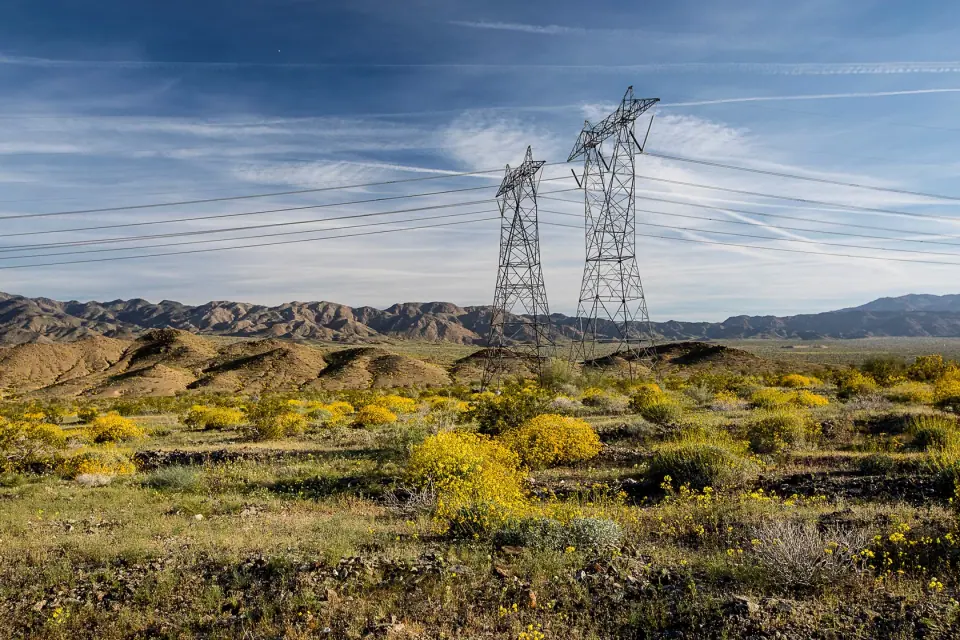
Senate negotiators released a revised energy and infrastructure permitting proposal Saturday, seeking to advance a bipartisan deal as tribal leaders warn that faster approvals could weaken protection of sacred places and cultural resources. Supporters and opponents expect a procedural vote Monday on whether to move toward considering the legislation. [1, 4, 5]
The measure, S. 5653, is sponsored by Republican Sens. Shelley Moore Capito and Mike Lee and Democratic Sens. Sheldon Whitehouse and Martin Heinrich. Their revised amendment follows negotiations over permitting legislation introduced in September. [1]
The debate presents a near-term test of cooperation after the midterm election. While Democrats are preparing a clean-energy agenda for their January majorities, this measure is being negotiated in the current Congress. The Associated Press reported Sunday that Trump has signaled both presidential vetoes and a willingness to negotiate with Democrats over their broader agenda. [6]
The proposed protection for electricity customers
One provision addresses who pays when a data center requires new power supplies or grid construction. Section 2107 of the revised text would prohibit utilities from recovering a covered site’s incremental retail service costs from other customers. Those costs include generation, storage, transmission and distribution needed to serve the site. [2]
The proposal would require financial assurances before utilities construct or upgrade facilities for a covered site. It also says recovery of those incremental costs should continue if the customer ends its contract or stops buying electricity before the costs have been paid. That provision addresses the risk of infrastructure remaining unpaid after a project leaves. [2]
The requirements generally would apply to sites connecting after enactment. Previously approved arrangements could remain in effect, although states could revise them where state law permits. The text therefore would not automatically replace every existing data-center electricity agreement. [2]
Supporters emphasize construction and investment
The senators said Saturday’s amendment responded to feedback since the proposal’s introduction in September. Heinrich said it incorporated concerns from Tribes and New Mexicans; Capito said targeted changes preserved the legislation’s foundation. [1]
“Our permitting system takes too long, costs too much, and leaves too much uncertainty,” Lee said in the joint announcement. He urged lawmakers to finish a negotiation he said had involved members of both parties, the House and Trump. [1]
The National Ocean Industries Association, which represents offshore energy businesses, welcomed the amendment Saturday. Its president, Erik Milito, argued that the legislation would provide more certainty for investment and support employment. The group cited an expected Nov. 9 cloture vote, a procedural step rather than final passage. [5]
Tribal objections before and after the amendment
In a Nov. 5 letter to Arizona Sens. Mark Kelly and Ruben Gallego, Gila River Indian Community Gov. Stephen Roe Lewis urged a vote against advancing the bill while its historic-preservation title remained. He argued that the changes would undermine protections for resources of cultural and religious importance to Tribes. [4]
“A NO vote is not a vote against permitting reform,” Lewis wrote. His letter said the Community operates utilities, roads and water infrastructure and supports a predictable permitting process, while seeking removal of the disputed title. The letter preceded Saturday’s revision and cannot be read as a response to the updated text. [4]
The Native American Rights Fund had raised similar objections in October, citing shorter review periods, narrower protections and reduced opportunities to challenge projects. Nine tribal organizations urged Senate leaders to remove provisions affecting consultation and cultural resources. Those objections concern the process communities use to influence projects, alongside the debate over electricity supply. [3]
In a statement Sunday, the National Congress of American Indians said Saturday’s amendment failed to resolve its core objections and urged senators to vote against cloture and remove Title III. The statement explicitly addressed the revised amendment, providing a response issued after the earlier tribal letters. [9]
A vote to advance would leave more decisions ahead
The expected Monday vote concerns moving the bill toward consideration. It would not by itself enact the proposal. Any final legislation would still need approval by both congressional chambers and presentation to the president. [4, 5, 8]
Even if permitting changes accelerate construction, household prices also depend on fuel costs, weather, power-plant expenses and maintenance of the grid, according to the U.S. Energy Information Administration. Faster project approvals and rules assigning infrastructure costs address parts of that system; actual rates also depend on utility costs and state regulation. [7]
Sources
- [1] Sen. Martin Heinrich · Nov. 7 joint announcement of the revised permitting amendment
- [2] Senate Environment and Public Works Committee · Revised amendment, Section 2107, printed pages 281–298
- [3] Native American Rights Fund · Oct. 20 position and Oct. 9 tribal-organizations letter
- [4] Gila River Indian Community · Gov. Stephen Roe Lewis’s Nov. 5 letter to Arizona senators
- [5] National Ocean Industries Association · Nov. 7 statement supporting the revised amendment
- [6] Associated Press · Nov. 8 reporting on the energy agenda and presidential vetoes
- [7] U.S. Energy Information Administration · Factors affecting electricity prices
- [8] National Archives · U.S. Constitution, Article I, Section 7
- [9] National Congress of American Indians · Nov. 8 response to the manager’s amendment